



Together, we are stronger!
Explore with us the psychological and unconscious dimensions of the environmental and broader civilisational crisis
Human beings are a straw carried away by the torrent of the Anthropocene. The environmental damage and social injustices are colossal. Individual and collective anxiety is rising, and social violence along with it. How can we build fronts for psychic survival and solidarity in this ongoing disaster? How can we resist the culture of uncare from which this tragedy—affecting not only humanity but all living beings—stems? What are the values we hold most dear, the ones closest to our hearts, that we must protect?
Psychoanalysis explores the essence of what makes us human. It focuses on our earthly condition both “on the couch” and “off the couch.” Psychoanalysis offers a way of understanding how individuals and societies respond to the brand new reality of the Anthropocene, both consciously and unconsciously.
Why this work matters
The health of our psychic lives and that of the societies in which we live depends on the stability of our living environments: our cultures and nature—the biosphere—which is fundamentally the cradle of our cultures. Today, the damage caused by the environmental crisis tragically threatens these living environments. And thus our emotional and psychic balance, both individual and collective.
Everyone may feel immense sadness, and even anger, at seeing the fertile biodiversity and stable climate of the Holocene disappear. A nature and a climate that were the cradle of so many beautiful civilizations. Everyone may feel anxiety in the face of the threatening unknown of an Anthropocene that seems to loom before us like a potentially crushing wall.
If you feel this way, if there are pockets of humanity and corners of biodiversity that you want to save, the Climate Committee’s website welcomes you with open arms. A new world is emerging, one that is upending our lives. Together, we must envision it, dream it. And to do so, it is our emotions and our projects that we must share.
Explore
Resources
A curated collection of articles, books, videos, and external materials addressing the climate crisis and its psychological dimensions.

News & Updates
Recent publications, announcements, and upcoming events from the Committee and related initiatives.
Objects to Be Saved
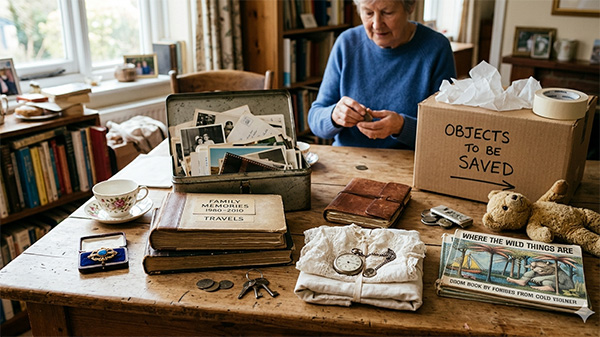
A reflective space exploring what is at risk — psychologically, culturally, and symbolically — in the context of the current crisis.
Latest updates
With Climate in Mind: Psychoanalysts on Climate Breakdown
This groundbreaking book enriches and expands psychoanalytic theory and method as it applies to the climate.
HOMO FABER – Book Review
Homo is sapiens, intelligent, according to Karl von Linné. Sapience distinguishes the human species from other living species. Homo is also demens, as a century of psychoanalytic practice and the immeasurable barbarity of the 20th century have taught us. Homo is essentially faber, argues Alain Papaux, following in the footsteps of Henri Bergson and Hannah Arendt: his propensity to do (faber) far outweighs his inclination toward restraint and wisdom.
MORE and MORE and MORE – Book Review
MORE and MORE and MORE is a radically new history of energy that reveals the fundamental strangeness of the notion of “energy transition.” The historiology reconstructed by Jean-Baptiste Fressoz explains how matter and energy are closely linked, grow together, accumulate, and pile up on top of each other.